One platform to run yourentire business.
Invistock is an inventory management platform with purchasing, multi-warehouse fulfillment and accounting built in — one system, one stock number, no syncing.
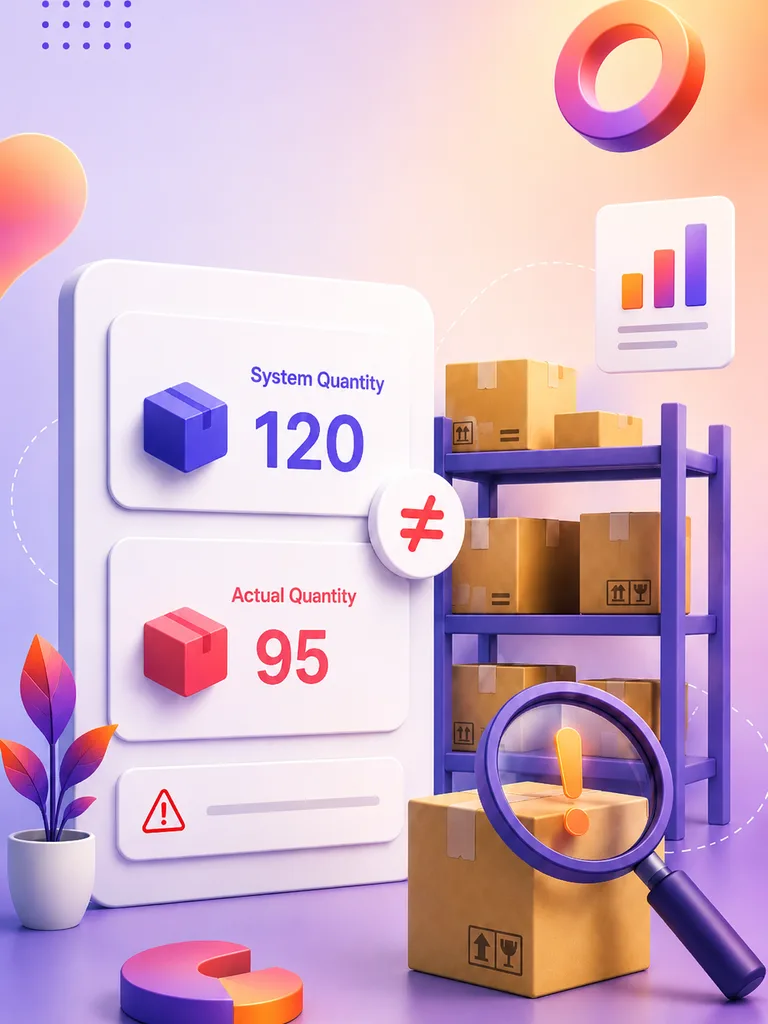
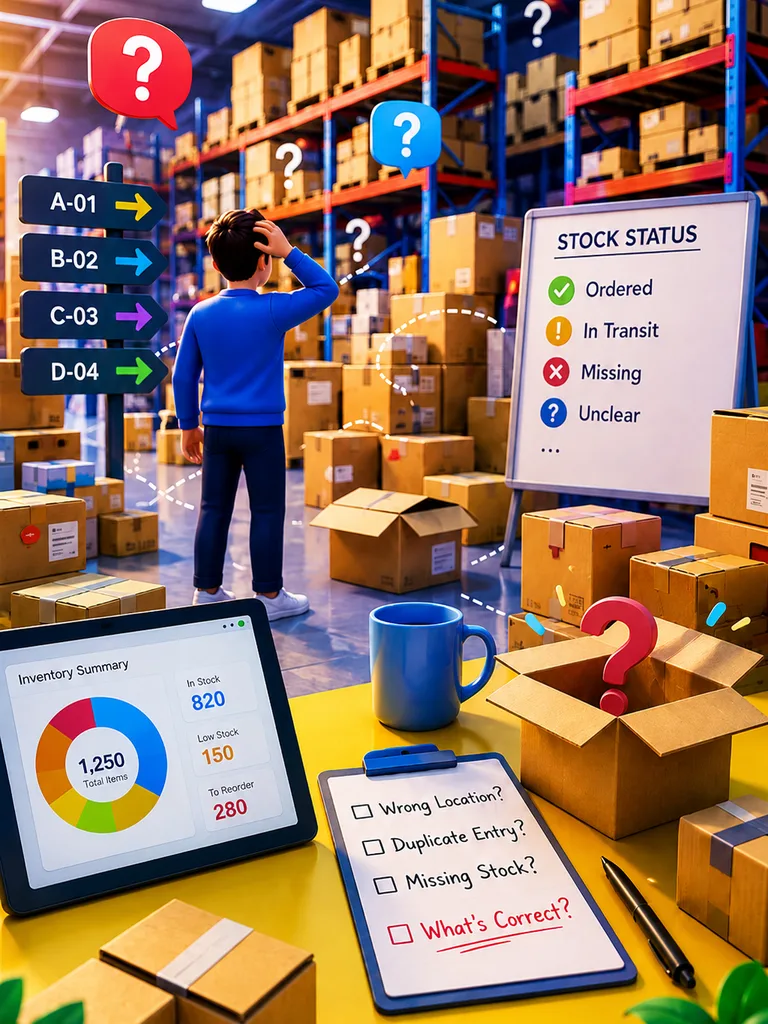
Running stock on disconnected tools costs you every day.
If any of these feel familiar, the tools are the problem — not your team.

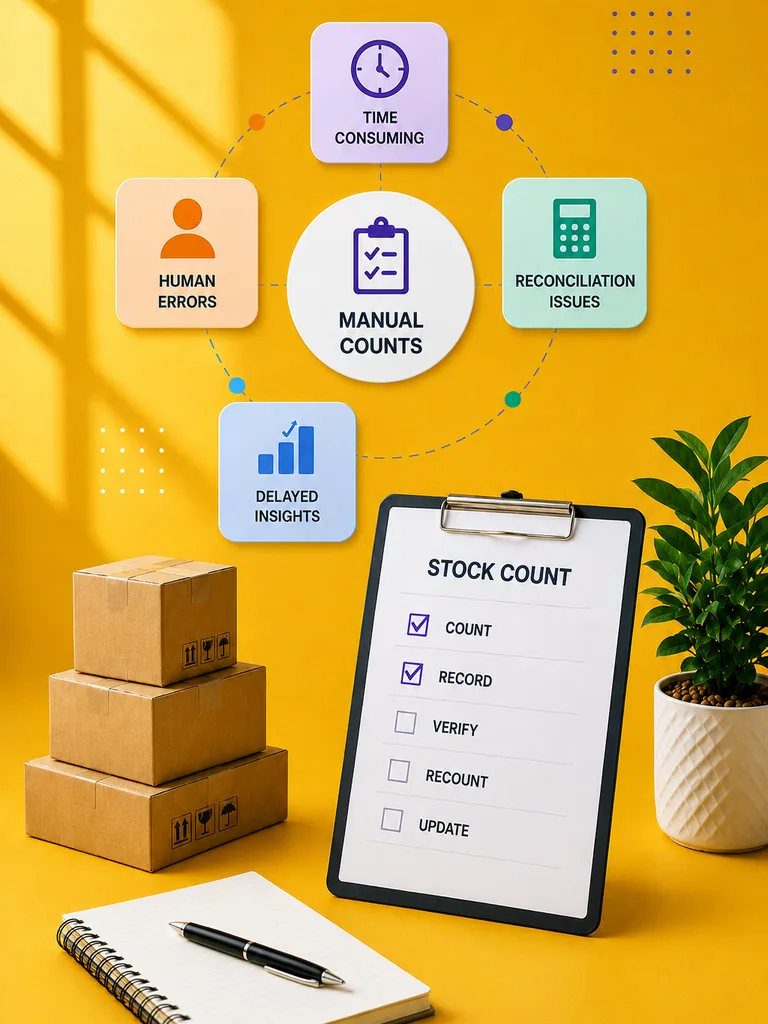

Retire the Friday-night count file.

It starts with an order — typed once, never again.
OMS-00012 comes in from Northgate Retail: two lines, tier pricing applied, tax computed. This is the last time anyone types these quantities.

Never wonder where your stock is.
Every screen below reads the same live number — nothing syncs overnight, because nothing needs to.
A catalog that holds up under scale
Items, variants, groups and bundles with the attributes your business actually uses — plus custom fields when the standard model runs out.
Everything you need to stop firefighting.
One live availability number per item, per warehouse — always.
Switch on only the modules you run, and pay for nothing else.
A real double-entry ledger in the same product — not a connector.
Roles can gate a single column, action or warehouse — no code.
iOS and Android barcode apps for the floor, at no extra licence.
Import your catalog from spreadsheets and receive stock this week.
The whole operation, on one number.
One system, not a bundle of acquisitions — expand a module to see what's inside.
Everything flows into one ledger.
Built for businesses that move physical stock.
If your money is sitting on shelves, Invistock is built for you. Switch on only the modules your operation needs.
The warehouse app is the same system, not a copy of it.
Receive a PO on scan, pick a sales order line by line, pack it into boxes, adjust a quantity with a typed reason. Every tap hits the same stock ledger your finance team is looking at.

Connected to the tools your operation already runs on.
Native connectors with credentials in an encrypted vault, every external call logged. GS1 barcode generation is live today; the roadmap ships in the order you ask for it.

Allocate real GTIN-12s from your own GS1 US account, register each product with GS1 and stamp the barcode on the item — audited end to end.
How GS1 barcoding works →



You only ever see the system you actually bought.
Don't price your items? Then invoicing, the ledger and every money field simply don't exist in your org — not greyed out, absent. A two-person stockroom and a multi-warehouse distributor run the same platform and never see each other's screens.
The core six modules already run a clean stockroom: put units in, take them out, count them, move them between warehouses. Set the Pricing feature to none and there are no prices, no invoices and no ledger — and nothing on screen asking for them.
Dependent features collapse to none automatically when Pricing is none.
All five optional modules off. The core six are the platform's floor — and already a complete stockroom.

Four fields never render — and Taxation, Pricing tiers and Financials collapse to none automatically, because they depend on Pricing. Your team is never taught to skip them; they were never there.
Priced to the system you actually run.
There is no list price, because there is no standard deployment. Your figure comes from one dial and a handful of switches — the same ones in the configurator above. A stockroom with no pricing at all and an operation running tiers, promotions and a full ledger are not the same product, and shouldn't cost the same.
Built to survive an IT review.
Role-based access down to the field: build a role that can receive stock but never see cost price — a single column, action or warehouse, gated without a developer.
Questions evaluators ask
Most teams import their catalog, warehouses, customers and suppliers from spreadsheets and run their first live receipt in under a week. Accounting setup — chart of accounts, fiscal year, posting rules — adds a few days if you're moving your ledger across at the same time.
See it running on your catalog.
Bring a spreadsheet of your SKUs. We'll load it live on the call and show you the receipt-to-ledger path end to end.